AI is changing art, but that does not imply that the creativity is over. The current art movement which people create through their use of AI technology resembles past artistic movements which emerged because of technological advancements. The introduction of AI technology to artistic work and creation leads to fresh artistic pathways which artists can use to discover their creative capacities. AI technology does not substitute for human creative abilities because it provides new environments which artists can use to create their work. The invention of advanced AI systems enables people to create new artistic possibilities while breaching existing limitations of human creativity.
Artists who work with AI technology use it as their creative tool. They keep control over creative work while using the software to assist with generating ideas and developing concepts and testing multiple artistic styles. Human emotional expression and artistic purpose and artistic significance create the essential link between art and human expression. The artist controls the final artistic message and purpose and the entire vision for the artwork despite AI technology granting new artistic options and enabling more adaptable workflows.
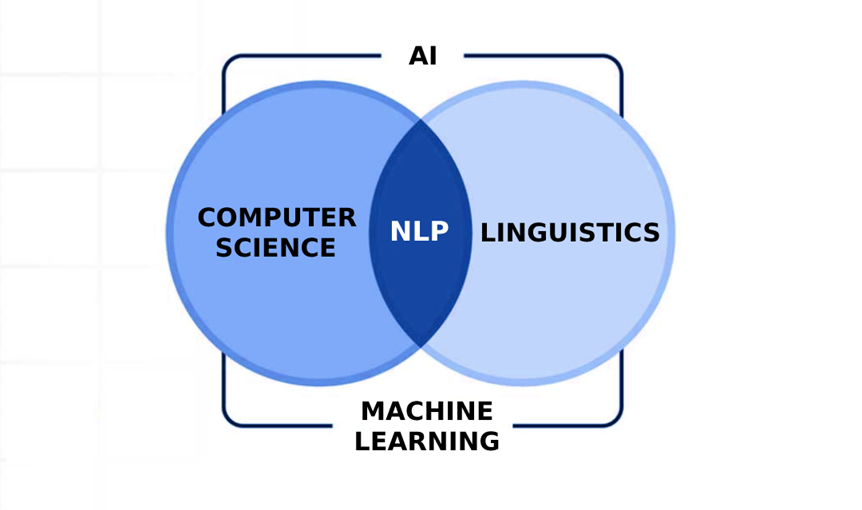
The Natural Language Processing field exists as an artificial intelligence domain which enables computers to comprehend human language through its two functions, understanding and generating language. Machines can operate with text and speech through NLP because it enables them to work with these forms of communication in a manner that matches human understanding. The system uses computer science together with linguistics and machine learning to process language and uncover its hidden meanings. The technology powers all common tools which include chatbots, translation applications, voice assistants, and search engines through its ability to process natural language user inquiries and speech.
NLP
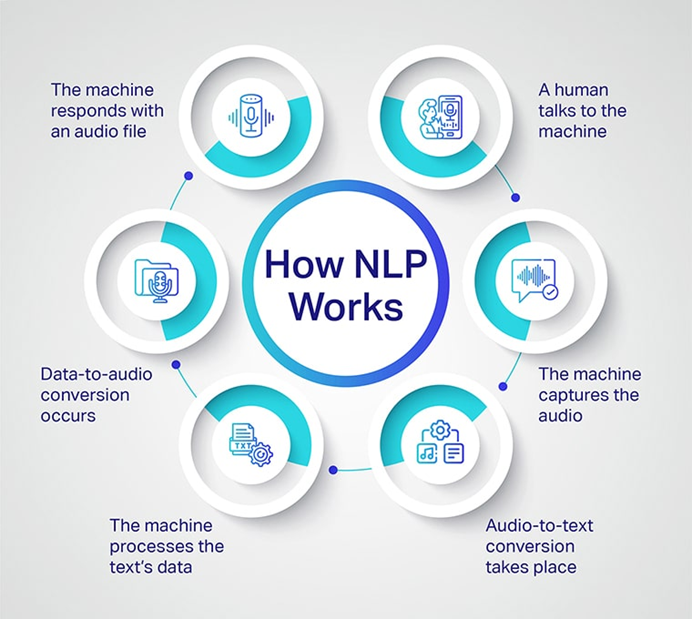
NLP exists to create a connection between human language communication and computer systems which handle information. The use of NLP technologies enables systems to achieve language pattern detection and entity recognition and sentiment analysis and contextually appropriate response generation. NLP includes multiple processes which start with tokenization and proceed through parsing and semantic analysis to enable computers to understand language better. The development of better machine learning models leads to stronger NLP capabilities which businesses now use to improve customer service and conduct data analysis and automate content processing tasks.
Time Log Teams – time spent on other Teams’ sites(must have 3 entries or more): Date: Feb. 27, 2026 From: 9:47 pm To: 10:05 pm Date: Feb. 27, 2026 From: 9:54 pm To: 10:25 pm Date: Mar. 02, 2026 From: 7:08 pm To: 7:35 pm
Time Log Students – time spent on other students’ sites (must have 3 entries or more): Date: Feb. 24, 2026 From: 4:10 pm To: 4:45 pm Date: Feb. 26, 2026 From: 5:55 pm To: 6:20 pm Date: Sat., Mar. 01, 2026 From: 2:00 pm To: 2:35 pm
Essay I. Summary of your activities in your contents including new contents created (one paragraph). Provide all the hyperlinks (clickable) of new contents you have created this week.
This week, I created two new posts called ‘AI Literacy’ and ‘LLMs’ under the TECH section and HW8 menus of my site. In the ‘AI Literacy’ post, I explained what AI literacy is and why it matters for students, especially because AI tools are becoming common in both school and work. In the ‘LLMs’ post, I gave a simple introduction to large language models, how they generate text, and why it is important to double check information instead of trusting everything they output. I also had a system issue where I lost my posts, data content, and comments from last week, so I had to redo HW7 again. After fixing that and rebuilding my content, I completed these two new posts for this week and added them to my menu for easy access.
Essay II. Summary of your “Thank you” event conversion (add screenshots) (one paragraph)
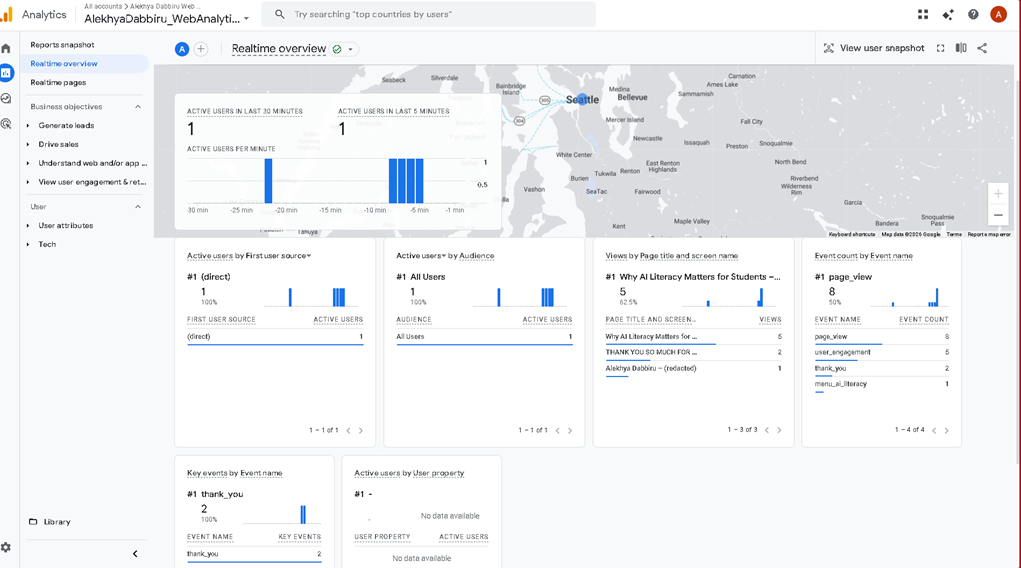
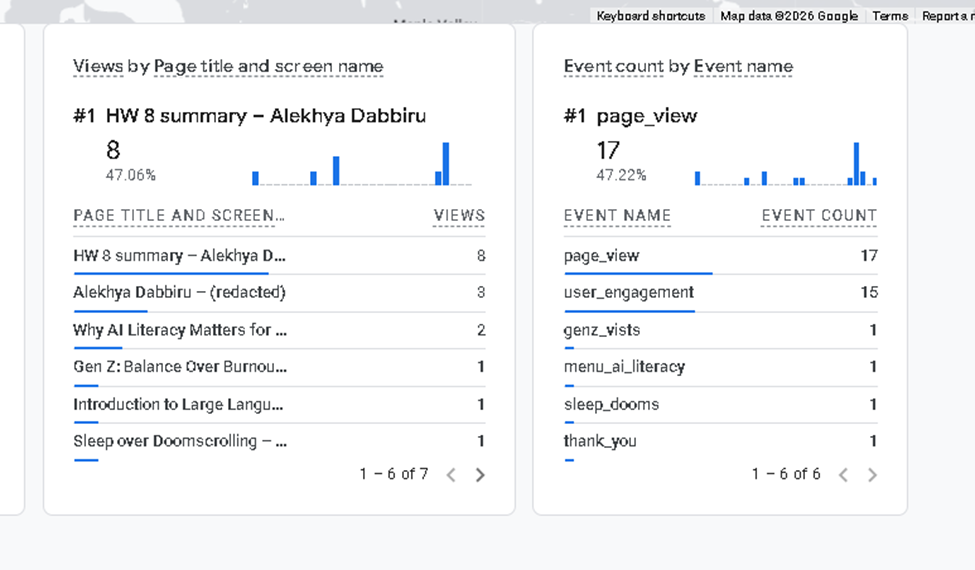
For this homework 8, I have created a ‘Thank You’ page on my website and tracked it as a conversion in GA4. I set up a GA4 event tag in Google Tag Manager, connected it to the correct trigger so it fires when the Thank You page is visited, and tested everything in Preview mode to make sure it worked. After that, I checked GA4 Realtime to confirm the thank_you event was showing up, and then I marked it as a key event in GA4. This helped me understand how conversions are created and verified.
Essay III. Summary of your “menu click” event conversion (add screenshots) (one paragraph)
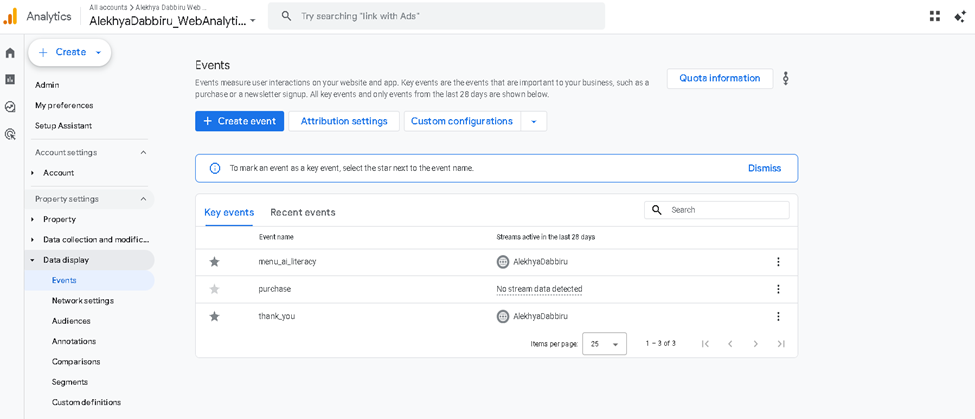
For the menu click event, I track when users click on the ‘AI Literacy’ link in my menu. I created a Click -Just Links trigger in Google Tag Manager and set the condition to fire when the Click Text contains AI literacy. Then, I built a GA4 event tag and connected it to that trigger. I tested everything using Preview mode to confirm the tag fired correctly.
After that, I checked GA4 Realtime and confirmed that the menu_ai_literacy event was showing up, and marked it as a key event to track it as a conversion.
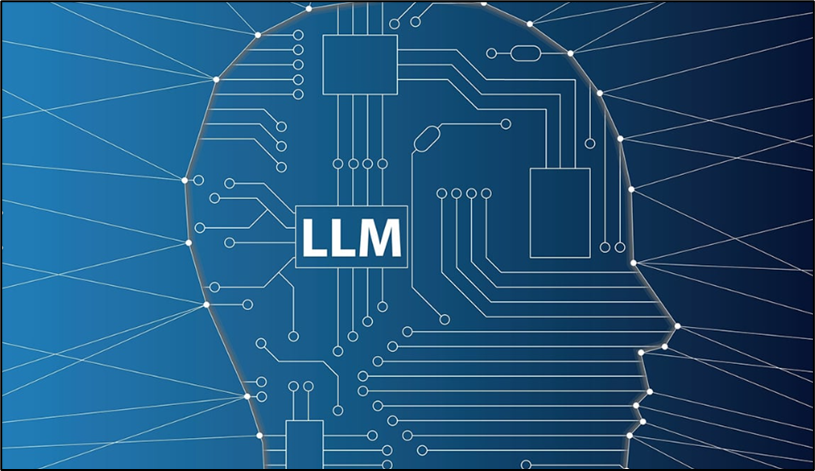
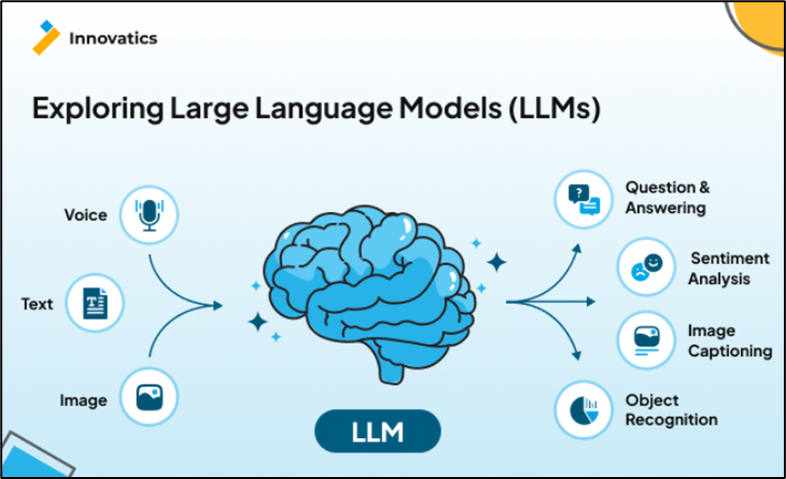
Large Language Models, which is popularly known as LLMs, function as artificial intelligence systems that can read and write like humans. They require extensive text data for their training because the model needs to understand language patterns to create responses and solve problems and produce text and perform translation work and make original content.
The understanding of information by LLMs differ from how humans comprehend the information. The system generates responses through word prediction that usually follows the training data patterns. Because of that, they can sound very confident even when the answer is incorrect. It is important to use these systems with caution because they can replicate existing biases from their training data. The introduction of AI tools to educational and professional environments makes it necessary to understand LLM functionality for responsible tool usage.
AI literacy requires people to understand what AI is, how it works, and how it should be used responsibly. People need to use tools, but they also need critical thinking skills to assess outcomes and identify restrictions and study problems which include bias and privacy.
Students require these skills as we know, AI is already part of everyday learning, and it is also helpful in their future careers. Schools and workplaces use AI tools as common resources and organizations want employees who can use these tools to boost productivity and solve problems and make better choices. Students who understand AI technology use chatbots for effective communication while verifying information instead of trusting every output.